
Getting a new piercing can be exciting, but some soreness afterwards is normal. Tenderness, mild swelling, redness, and sensitivity can occur because your body is responding to a small wound.Fortunately, uncomplicated piercing pain and discomfort usually improve as the piercing healing process begins. Good piercing aftercare focuses on keeping the area clean, minimising irritation, and allowing your body enough time to heal.Here’s how to care for a fresh piercing, ease discomfort, clean it correctly, and recognise possible signs of an infected piercing.
Contents
- 1 Is Pain Normal After a Piercing?
- 2 Feeling Nervous About Getting a Piercing?
- 3 How to Ease Pain After a New Piercing
- 4 Oral Piercing Aftercare
- 5 What Shouldn’t You Put on a Fresh Piercing?
- 6 Don’t Remove Piercing Jewellery Too Early
- 7 Piercing Irritation or Infection?
- 8 Should You Remove an Infected Piercing?
- 9 Can You Swim With a New Piercing?
- 10 Give Your Piercing Time to Heal
Is Pain Normal After a Piercing?
Some pain immediately after getting a piercing is normal. A fresh piercing may remain tender for several days depending on its location, your individual healing response, and how well it is protected from irritation.Normal early piercing healing symptoms can include:
- Mild tenderness or soreness
- Localised swelling
- Slight redness or discolouration
- Minor bruising
- Occasional light bleeding
- Itching
- Small amounts of pale fluid that dry into crust
These symptoms should generally improve over time.Increasing pain, severe swelling, spreading redness or discolouration, excessive warmth, or thick, unpleasant-smelling discharge may indicate a problem and should be taken more seriously.
Feeling Nervous About Getting a Piercing?
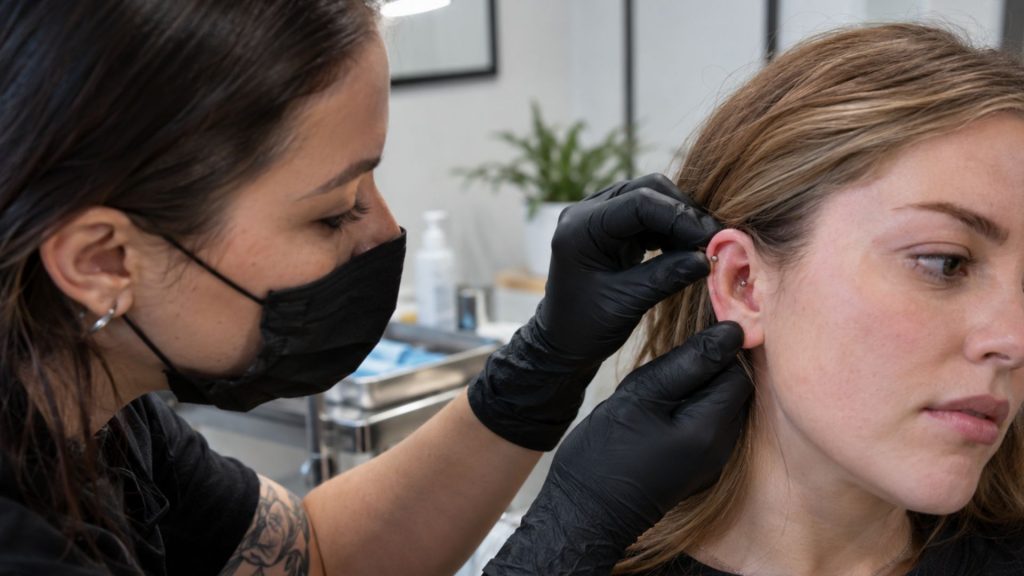
If you’re nervous before a piercing, simple relaxation techniques may help.Try breathing slowly through your nose and gently breathing out. Listening to music, closing your eyes, or talking to your professional piercer can also provide a distraction.Tell your piercer if you’re anxious or prone to feeling faint around needles. An experienced piercer can help you get comfortable and guide you through the procedure.
How to Ease Pain After a New Piercing
Knowing how to care for a new piercing can help reduce unnecessary irritation and discomfort.Good new piercing aftercare primarily involves keeping the area clean, protecting it from pressure and friction, and avoiding unnecessary handling.
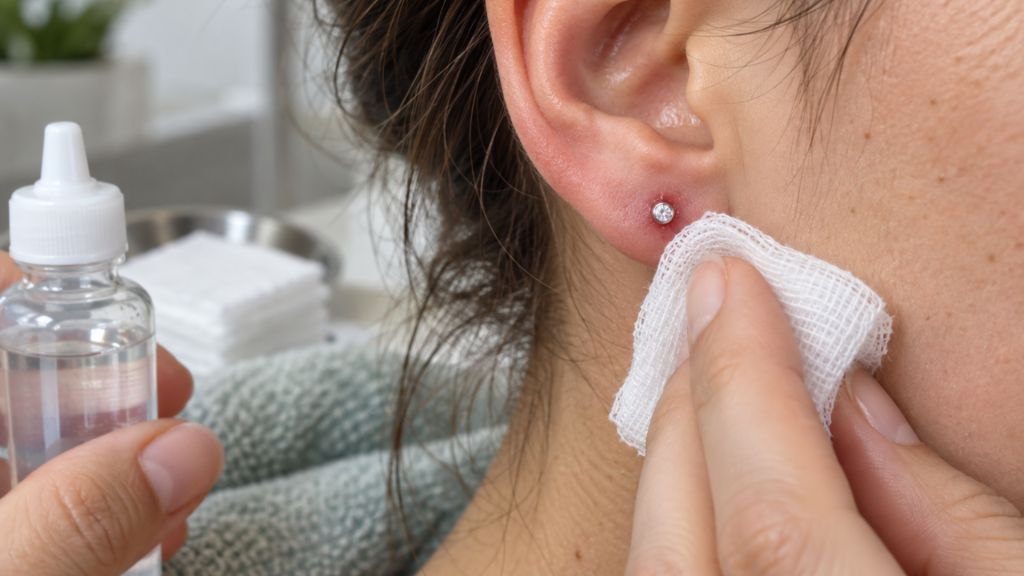
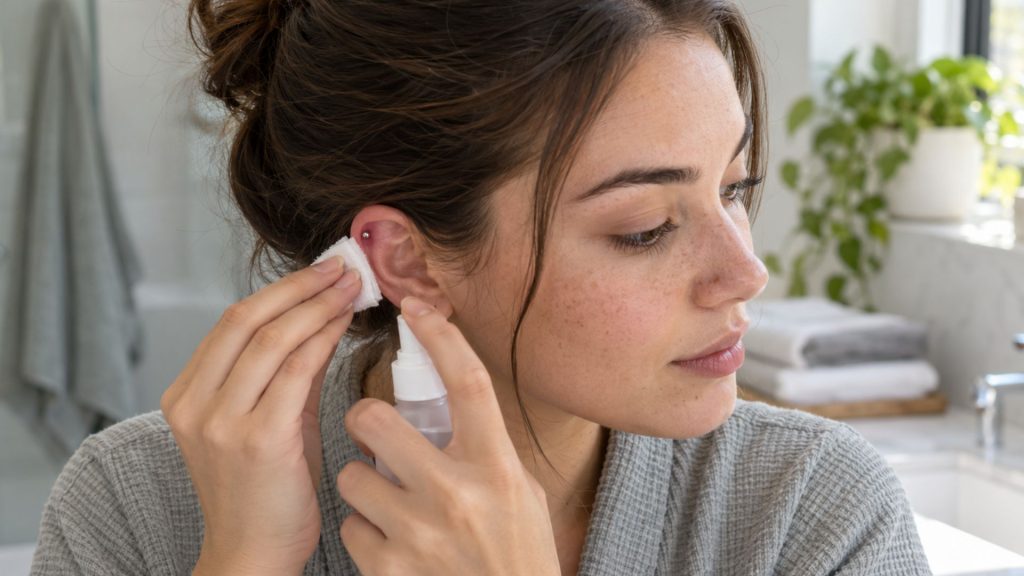
Clean Your Piercing With Sterile Saline
For many external piercings, sterile saline wound wash containing 0.9% sodium chloride is a straightforward cleaning option.Always wash your hands thoroughly before touching your piercing. Apply saline according to the product instructions and gently dry the surrounding area with a clean disposable product when necessary.Avoid aggressive scrubbing or trying to remove every piece of crust. Excessive cleaning can irritate healing tissue, so follow the cleaning frequency recommended by your professional piercer.Homemade saltwater solutions aren’t ideal because getting the concentration right can be difficult. A solution that is too salty may dry and irritate the skin.
Don’t Twist or Rotate Your Jewellery
New piercing jewellery generally does not need to be regularly twisted or rotated.Repeatedly moving jewellery can disturb delicate tissue inside the piercing channel and cause additional irritation.Leave your jewellery alone as much as possible and only touch the area with freshly washed hands when necessary for cleaning.
Reduce Pressure and Friction
Pressure, rubbing, and snagging can keep a piercing sore and contribute to irritation.Depending on the location, be careful around clothing, towels, headphones, helmets, hair, bedding, glasses, phones, hats, and accessories.For ear piercing aftercare, especially cartilage piercing aftercare, avoid sleeping directly on the affected ear. Pressure on a fresh helix, tragus, conch, or other cartilage piercing can increase swelling and irritation.
Consider Suitable Pain Relief
If discomfort is bothering you, an over-the-counter pain reliever may be appropriate for some people. Always follow the medicine’s instructions.If you have an existing medical condition, take other medicines, are pregnant, or aren’t sure what you can safely use, speak with a pharmacist or healthcare professional.
Oral Piercing Aftercare
Tongue, lip, and cheek piercing aftercare requires slightly different care because these piercings involve the mouth.Swelling is common during the first few days. Cold foods, chilled drinks, or small pieces of ice allowed to dissolve in your mouth may provide temporary relief.Stay hydrated and maintain good oral hygiene. An appropriate alcohol-free and hydrogen peroxide-free mouth rinse may also be recommended.During early healing, avoid very hot, spicy, salty, or acidic foods if they cause irritation. Smoking and vaping can also irritate oral tissue and may interfere with healing.
What Shouldn’t You Put on a Fresh Piercing?
Stronger cleaning products don’t necessarily make piercings heal faster. Harsh chemicals may irritate delicate tissue and potentially prolong healing.Unless specifically recommended by an appropriate healthcare professional, avoid routinely using:
- Hydrogen peroxide
- Rubbing alcohol
- Iodine or harsh antiseptics
- Strong antibacterial soaps
- Antibiotic or petroleum-based ointments
- Perfumes, lotions, or cosmetics around the piercing
When considering how to clean a piercing, gentle care is generally better than repeatedly applying different products.
Don’t Remove Piercing Jewellery Too Early
A piercing heals externally and internally, so it may look healed on the surface while the tissue underneath remains fragile.Removing jewellery too early can cause the piercing channel to shrink or close.There is no universal piercing healing time. Earlobes may heal faster than cartilage, nipple, navel, and certain facial piercings, which can take many months.Follow the timeframe recommended by your professional piercer. If jewellery needs downsizing during healing, have a qualified piercer assess it rather than changing it yourself.
Piercing Irritation or Infection?
A tender, swollen, or slightly crusty piercing isn’t automatically infected.Piercing irritation may result from pressure, snagging, sleeping on the piercing, unsuitable jewellery, excessive cleaning, repeated touching, or jewellery that doesn’t fit correctly.Possible infected piercing symptoms include:
- Pain that continues to increase
- Severe or worsening swelling
- Significant warmth
- Spreading redness or discolouration
- Thick yellow, white, or green pus
- Unpleasant-smelling discharge
- Fever, chills, or feeling generally unwell
If you notice these symptoms, contact a healthcare professional.
Should You Remove an Infected Piercing?
Don’t automatically remove jewellery if you suspect an infected piercing. Removing it may allow the opening to begin closing while infection is still present.Instead, seek medical advice and follow the healthcare professional’s instructions.If jewellery becomes embedded, excessively tight due to swelling, or appears to be disappearing beneath the skin, seek professional help promptly.
Can You Swim With a New Piercing?
It’s generally best to avoid swimming or submerging a fresh piercing in pools, hot tubs, lakes, rivers, and similar environments while it heals.These environments may expose healing tissue to bacteria, chemicals, and other irritants.If you’re planning a holiday, swimming trip, or spa visit, consider allowing enough piercing healing time beforehand.
Give Your Piercing Time to Heal
Successful piercing aftercare doesn’t need to be complicated.Keep your hands clean, use appropriate sterile saline, avoid unnecessary touching, and protect your piercing from pressure, friction, and snagging.Staying hydrated, eating a balanced diet, and getting enough sleep can also support your body’s normal healing process.Most importantly, pay attention to changes over time. Mild tenderness and swelling should gradually settle. Pain, swelling, redness, warmth, or discharge that becomes noticeably worse deserves professional attention.With gentle new piercing care, suitable jewellery, and enough healing time, most uncomplicated piercings can heal successfully without harsh products or elaborate home remedies.